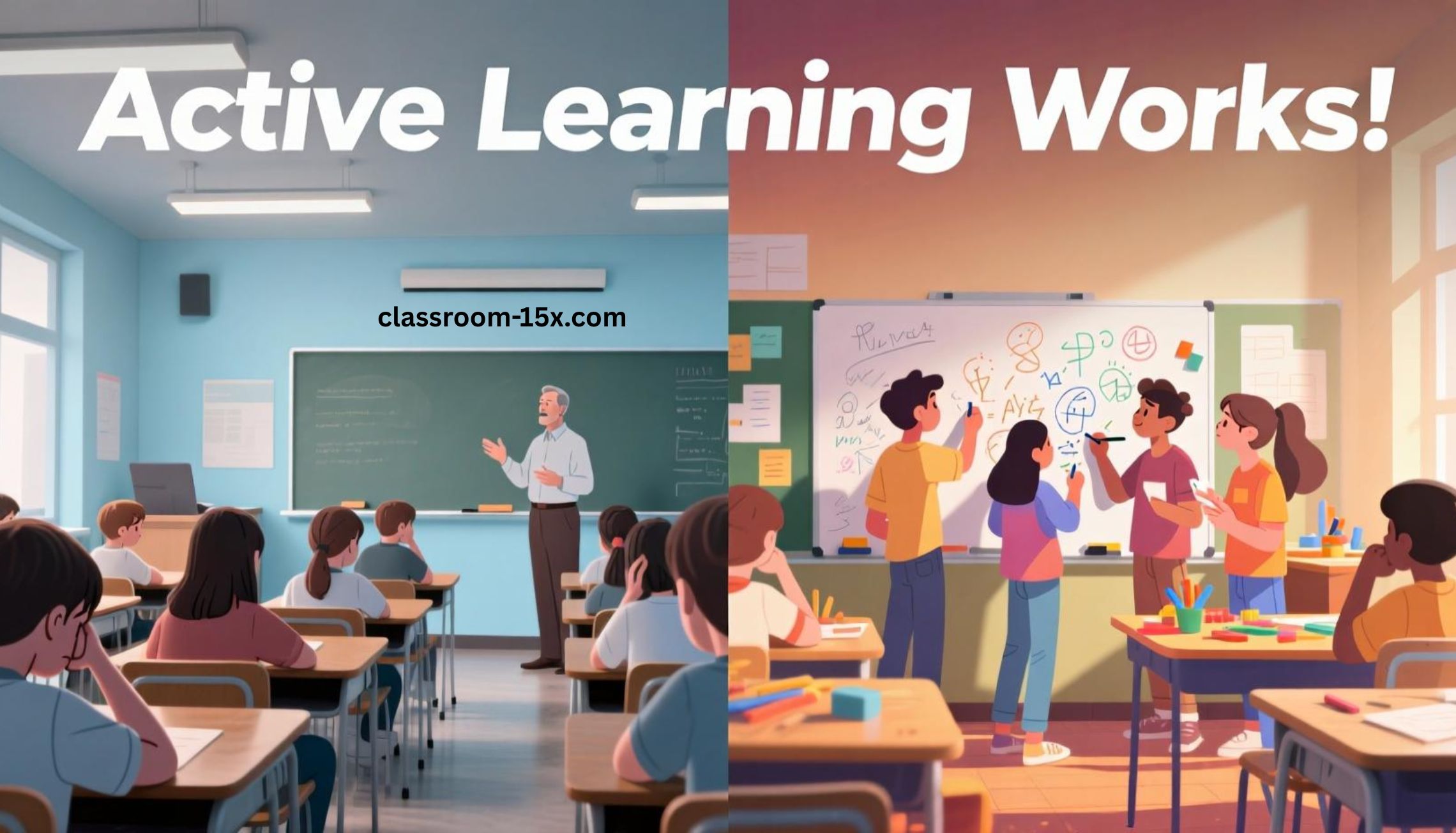
Most classrooms are quiet. Students sit. The teacher talks. But many students don’t learn well this way. They lose focus. They forget what they hear. They stop caring.
Now think about a different kind of classroom. One where students talk, move, ask questions, and solve problems. That’s an active classroom. And it works.
What Is an Active Classroom?
An active classroom is a place where students do more than listen. They join in. They talk with each other. They write, draw, move, and ask questions.
This kind of classroom keeps students involved in their own learning. They don’t sit and wait for answers. They work to find them.
You’ll hear students talk. You’ll see them work together. The teacher helps and guides. But students do more of the thinking.
Why Active Classrooms Work
Here’s what we know.
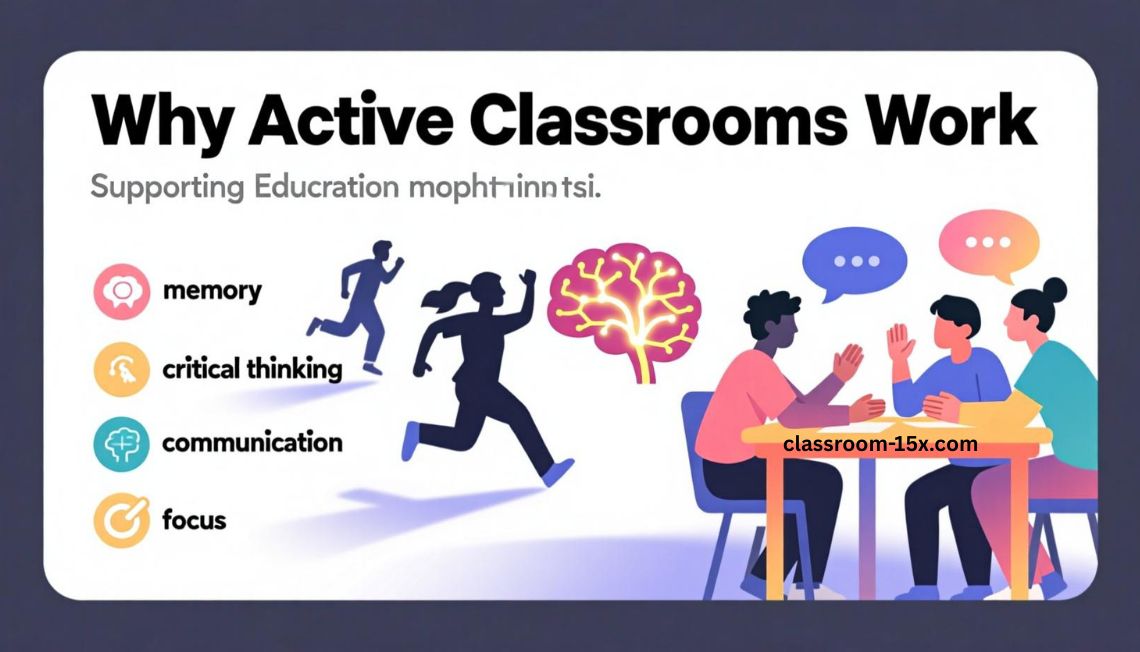
Students remember more.
When students move and talk, they remember lessons better.
They think harder.
Active learning helps them connect ideas and solve real problems.
They learn people skills.
They work in groups. They share ideas. They learn to listen and speak.
They stay focused.
Moving and doing things keeps the brain awake. Long lectures do not.
What You Will See in an Active Classroom
When you walk into an active classroom, you will notice a big difference.
- Students sit in small groups, not in rows
- They talk and share ideas with each other
- The teacher moves around and listens
- There may be charts, sticky notes, or tablets on the tables
- Students may use whiteboards, markers, or hands-on tools
It may sound busy, but it’s not wild. There are clear rules and goals. The activity has a purpose.
Clear Examples of Active Learning
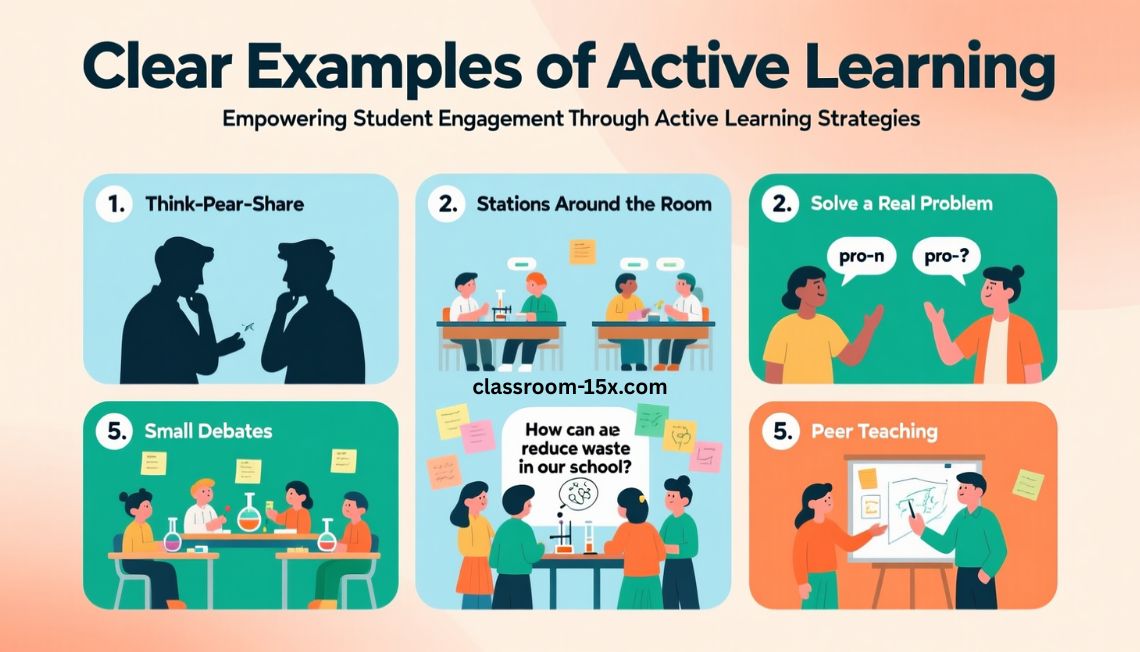
Here are five ways you can make your classroom more active. These ideas are easy to try.
1. Think-Pair-Share
Ask a question. Let students think quietly. Then they talk to a partner. Last, they share ideas with the class.
Why it works: Every student gets time to think and speak. It builds confidence.
2. Stations Around the Room
Set up 3 to 5 small stations. Each one has a different task. Students move through them in small groups.
Why it works: Students get to move, talk, and try different things. They stay focused.
3. Small Debates
Give a simple topic. Split the class into two sides. Each group shares their side and listens to the other.
Why it works: Students learn to explain their thinking. They learn to listen too.
4. Solve a Real Problem
Give your class a big question with no clear answer. For example, “How can we reduce waste in our school?”
Let them work in teams. They must plan and share their ideas.
Why it works: This feels real. Students think harder when the problem matters to them.
5. Peer Teaching
After a lesson, ask students to teach one part to a partner or group. They can draw, explain, or show examples.
Why it works: If they can teach it, they understand it. It also helps other students.
How to Start Making Your Classroom Active
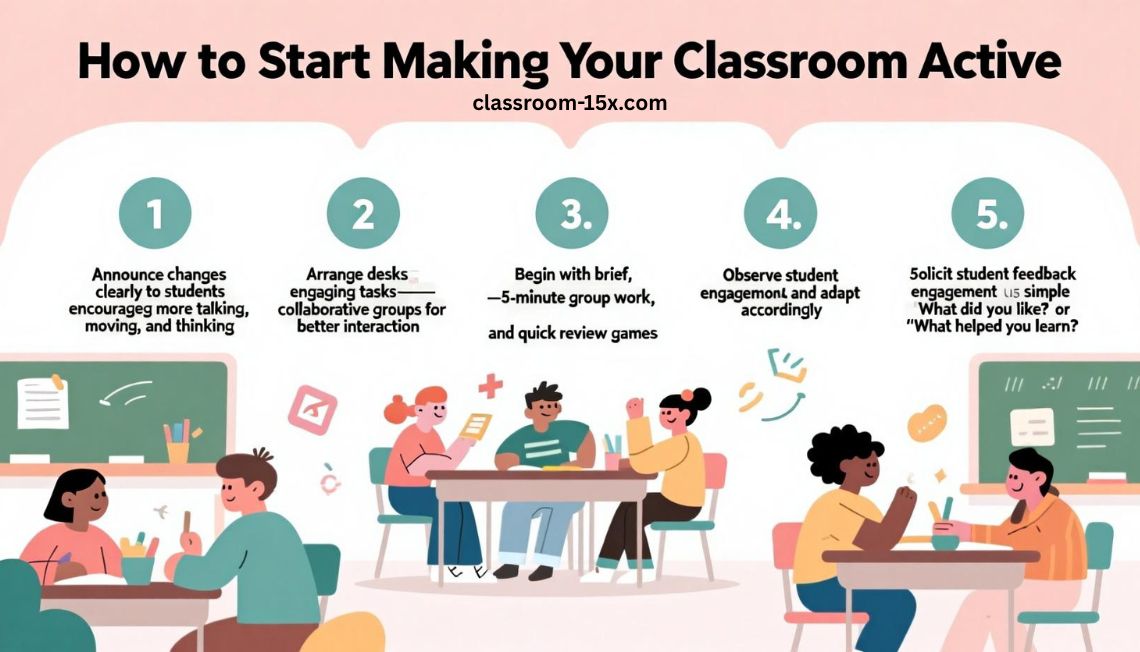
You do not need to change everything right away. Try one small change and grow from there.
1. Tell your class what will change
Say, “You will be more active in class now. You will talk more, move more, and think more.”
2. Move your desks
Put desks in groups. This makes it easier for students to work together.
3. Start with short activities
Try a 5-minute group task. Try a 2-minute talk with a partner. Try a short game to review a lesson.
4. Watch what works
See how students respond. If they like one activity, use it again. If one doesn’t work, change it next time.
5. Ask your students
After an activity, ask, “What did you like?” or “What helped you learn?” Use their answers to improve.
Problems You Might Face and How to Handle Them
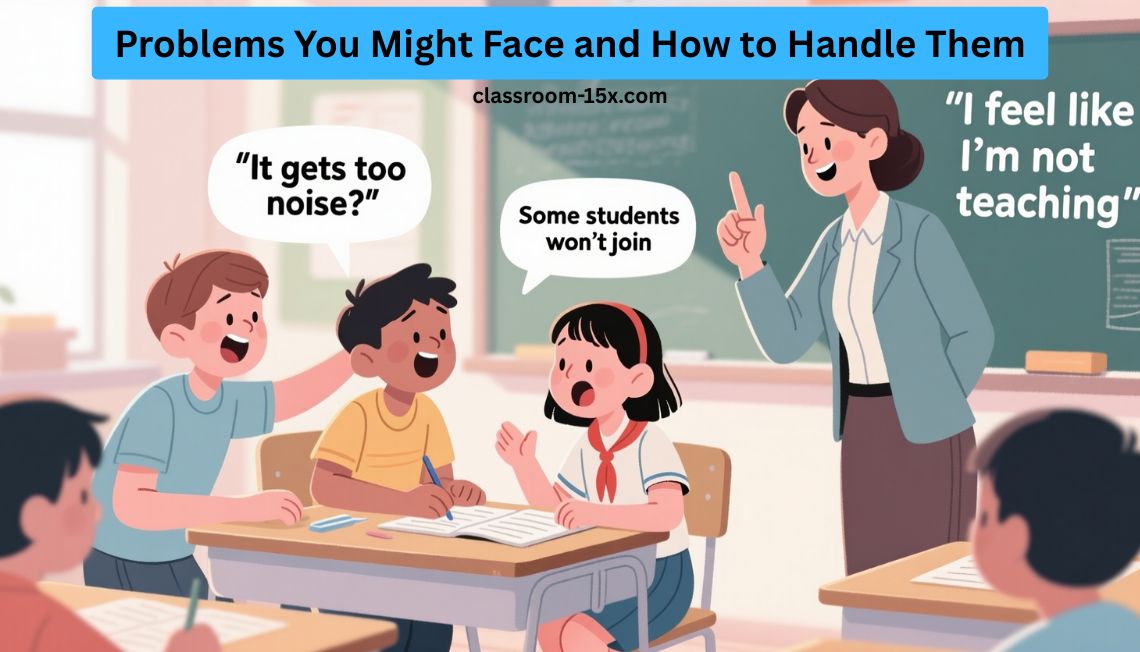
“It gets too noisy.”
Yes, active classrooms are louder. But that’s okay. Set voice levels. Use signs or hand signals to keep noise low. Practice this with your class.
“Some students won’t join.”
Start with small tasks. Pair shy students with kind partners. Give everyone clear roles. Praise effort, not just results.
“I feel like I’m not teaching.”
You still teach. But your job changes. You guide. You ask better questions. You support learning in the moment. Students learn more because they work more.
Read: Transparent Classroom: A Clear Look at What Your Child Learns Every Day
What Your Role Looks Like
In an active classroom, the teacher is still in charge. But you do things differently.
You:
- Give short, clear instructions
- Set up the room and tools
- Watch and listen to your students
- Ask helpful questions
- Give feedback as they work
- Celebrate what they do right
You teach more by doing less talking.
Easy Tools You Can Use
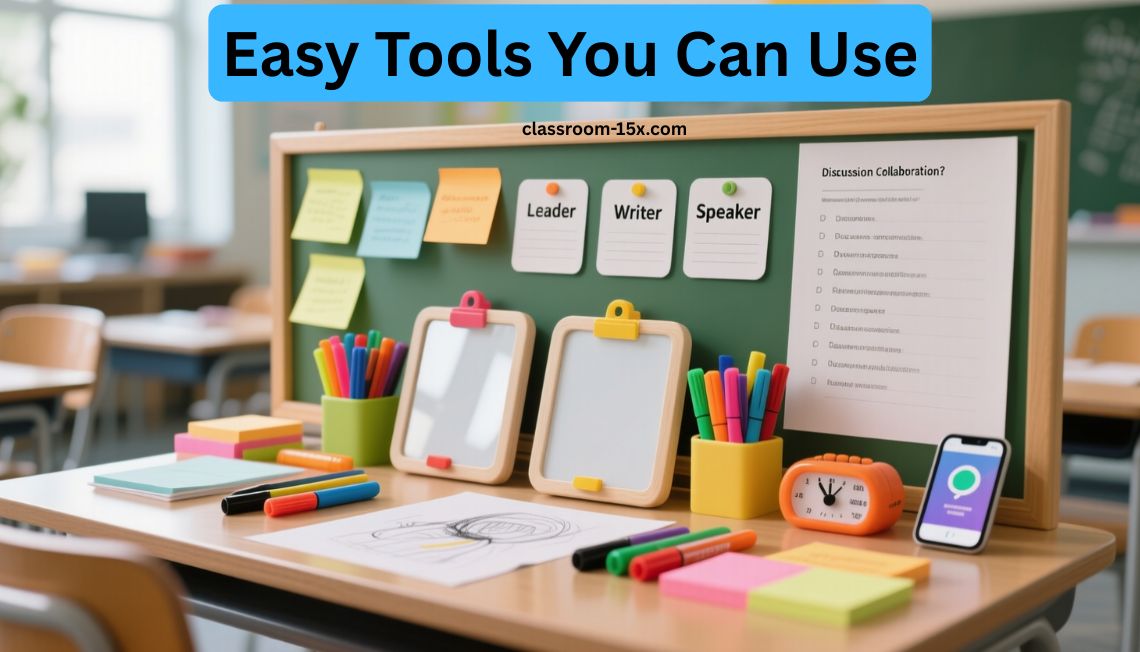
You don’t need anything fancy. These simple tools help:
- Sticky notes
- Mini whiteboards
- Markers and paper
- Timers
- Group job cards (leader, writer, speaker)
- A list of questions to ask during work time
You can also use apps if your school has devices. But you don’t need them to start.
What Students Say About Active Classrooms
Students often say things like:
- “I like working with others.”
- “Time goes faster in class now.”
- “I remember more from today.”
- “It feels fun, but I still learn.”
They enjoy the chance to speak, move, and create. This helps them stay motivated.
What Parents Notice
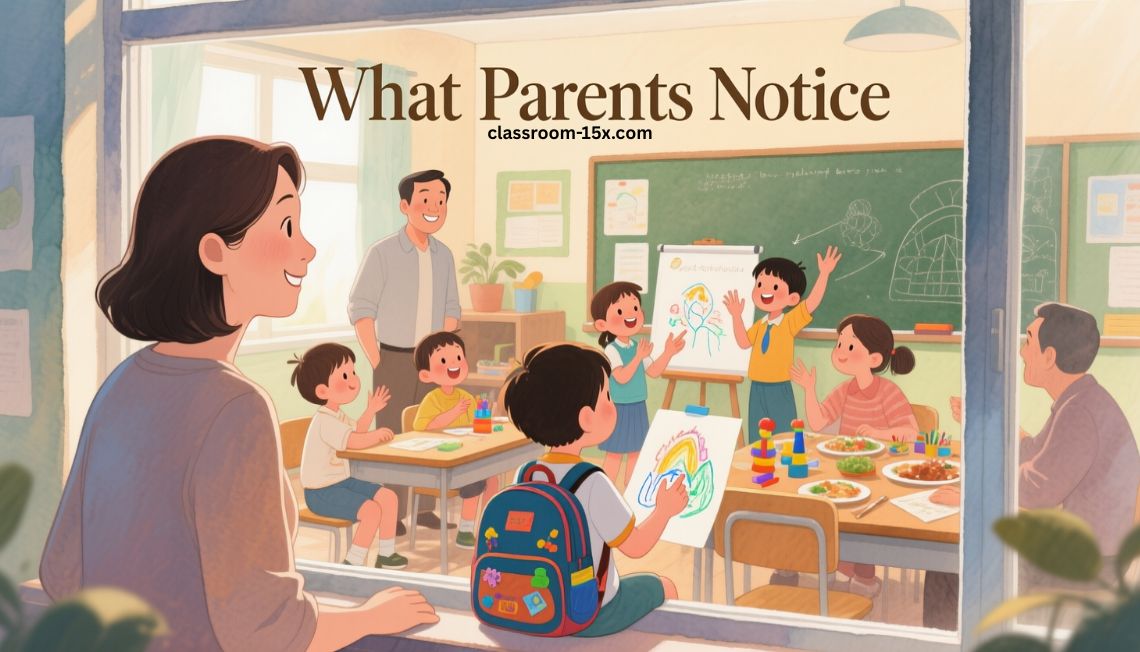
When classrooms become more active, parents see the change too.
- Kids talk more about their school day
- They feel proud of their work
- They start to enjoy school again
- They grow more confident in speaking and thinking
These are real wins for both home and school.
Active Classrooms Are for Every Age
This works for all grades. First graders can move and talk. High school students can debate and solve big problems. Even college students learn better this way.
You Can Do This
You do not need to be perfect. Start small. Try one thing. Build from there. Ask other teachers what works for them. Share ideas.
The best part? You’ll see the change. Students will care more. They’ll learn more. And they’ll want to come to class.
FAQs
What is the main goal of an active classroom?
To help students learn by doing, not just by listening.
Can I still meet standards this way?
Yes. Active learning helps students reach all goals. It just changes how they get there.
What if I teach online?
You can still use active learning. Use tools like breakout rooms, polls, and shared slides. Keep lessons short and tasks active.
Is this just for young kids?
No. Students of all ages learn better with active methods.
What if my class has behavior problems?
Set clear rules. Start small. Active classrooms can reduce bad behavior when students feel involved and valued.
Do I need special training?
No. You can learn as you go. Try one method. Talk to other teachers. Watch what works.
Conclusion
Students learn best when they are part of the learning. Active classrooms make this happen. You don’t need big changes. You just need to start. And once you do, you’ll see the difference in your students every day.