Many students now take classes from home. This is called remote learning. It means students do school online instead of going to a classroom.
Some kids like it. They enjoy working from home. Some kids find it hard. They miss their friends and get distracted.
Parents also find remote learning hard. It can be stressful to help kids with school while working or doing other tasks.
This guide helps you understand what remote learning is, how it works, what problems it brings, and how to make it better.
What Is Remote Learning?
Remote learning means learning from a distance. Students use a computer, tablet, or phone to join classes. They use tools like Zoom, Google Classroom, or Microsoft Teams.
Some lessons are live. Some are videos. Some teachers give work to do on your own.
Students can learn from anywhere. But they still need to do schoolwork, take tests, and turn in homework.
Why People Like Remote Learning
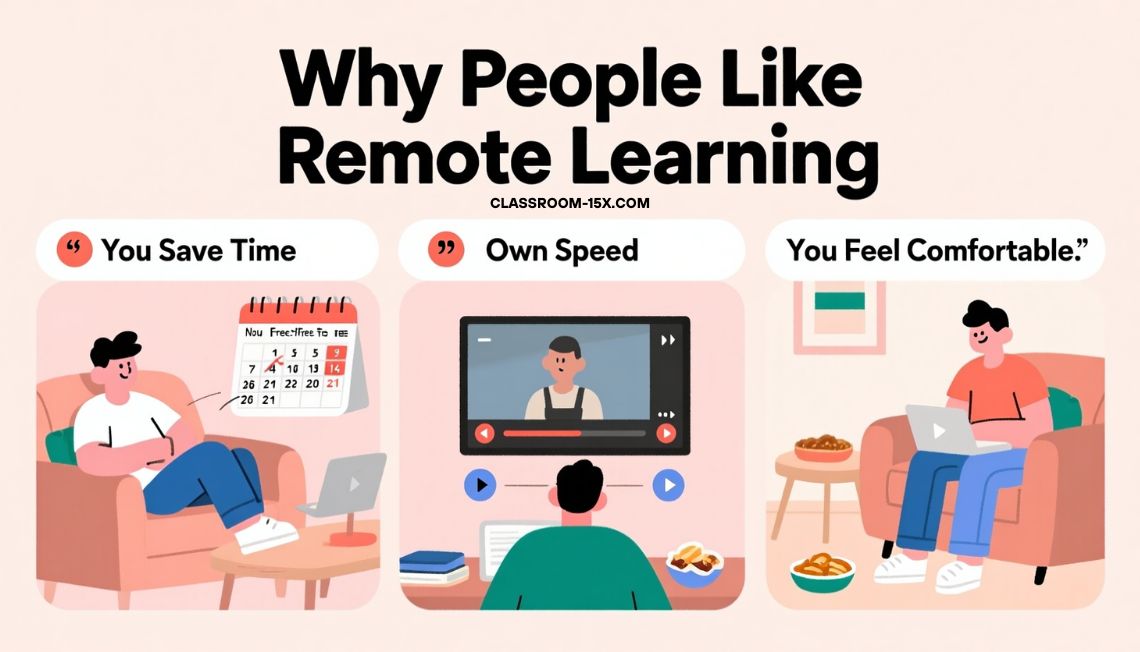
You Save Time
No bus. No long car rides. You wake up, eat, and go to class at home. That means more time for rest, meals, or family.
You Can Go at Your Own Speed
Some students work fast. Others need more time. With remote learning, you can pause videos, go back, and take breaks.
You can focus on what’s hard for you. You don’t need to keep up with others.
You Feel Comfortable
You stay in your space. You wear what you want. You eat when you’re hungry. That helps you feel calm.
Why People Struggle With Remote Learning
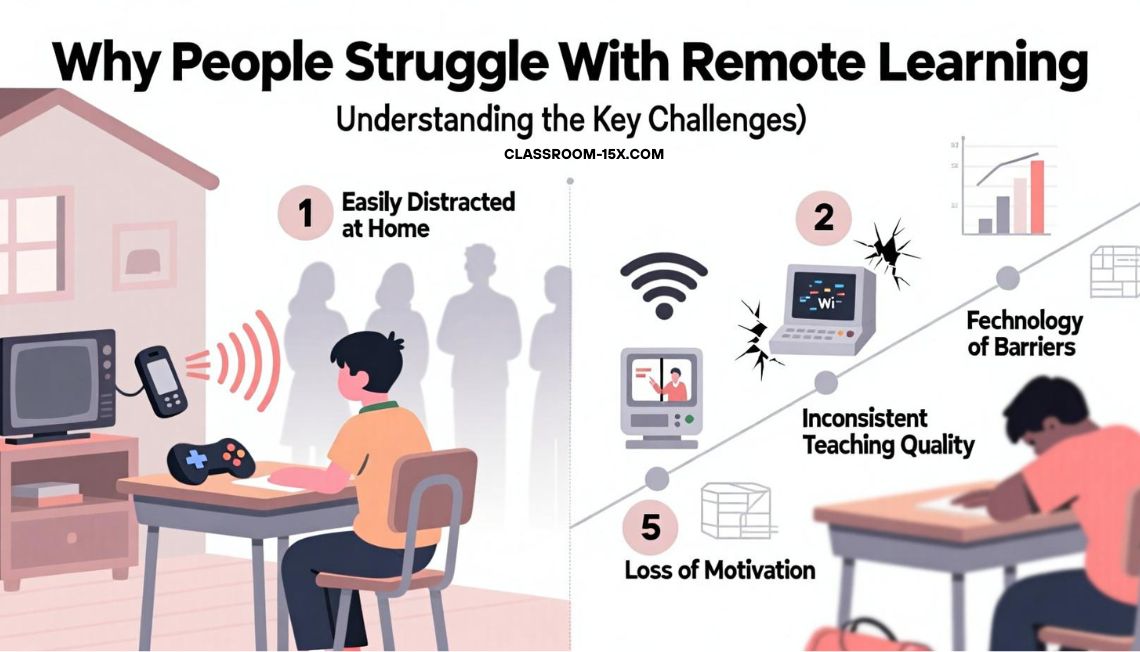
It’s Easy to Get Distracted
Home has noise. There’s TV, phones, and games. It’s hard to pay attention. Some students stop watching or working.
If no one checks on them, they fall behind.
It Can Feel Lonely
In school, you talk to friends. You ask the teacher questions. You eat lunch together.
At home, you are often alone. You may miss talking and playing. This can make learning feel boring or sad.
Tech Problems
Some homes have slow Wi-Fi. Some students don’t have a laptop or tablet. Some platforms crash.
Even when the tech works, it can be confusing. Students and parents may not know how to use it.
Not All Teachers Are Ready
Teaching online is hard. Some teachers are great at it. Others struggle.
Good teaching online is not just talking on a screen. It takes planning and practice. Some teachers give too much work. Some give too little. Some are unclear.
Students May Lose Motivation
In a classroom, a teacher checks your work. You hear reminders. You see others doing the same tasks.
At home, you don’t get that. You need to push yourself. That’s hard for many students, especially younger kids.
How To Make Remote Learning Work
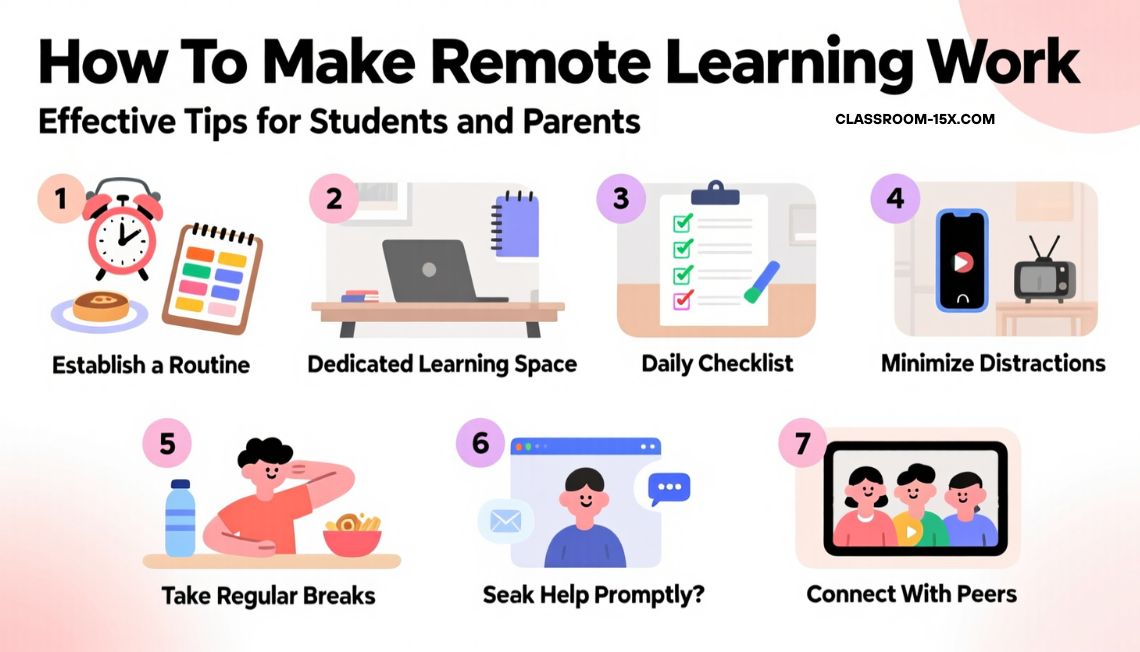
1. Set a Daily Schedule
Get up at the same time each day. Eat breakfast. Sit at your desk or table. Follow a plan.
Write your classes and tasks on a calendar. Take breaks at the same times. A routine helps you stay on track.
2. Make a Learning Space
Pick one spot for school. It could be a desk, table, or quiet corner. Keep it clean. Have all your tools nearby.
When you sit there, your brain knows it’s time to learn.
3. Use a Simple Checklist
Write down what you need to do each day. Cross off tasks when you finish them.
This helps you see progress. It feels good to finish tasks. It also helps parents check how things are going.
4. Turn Off Distractions
Put your phone in another room. Turn off the TV. Block game sites and social apps.
Some students use noise-canceling headphones. That helps block noise from others in the house.
5. Take Breaks
Don’t sit too long. Every hour, stand up and stretch. Walk around. Get a snack or water.
Breaks help your brain reset. After a break, it’s easier to focus again.
6. Ask for Help
If something is hard, speak up. Tell your teacher. Email or message them.
If you’re a parent, don’t wait. If your child is confused, contact the teacher early.
7. Stay in Touch With Classmates
Send a message. Set up a video call. Join a study group.
You may not sit next to each other, but you can still work together. This makes learning feel less lonely.
For Parents: What You Can Do
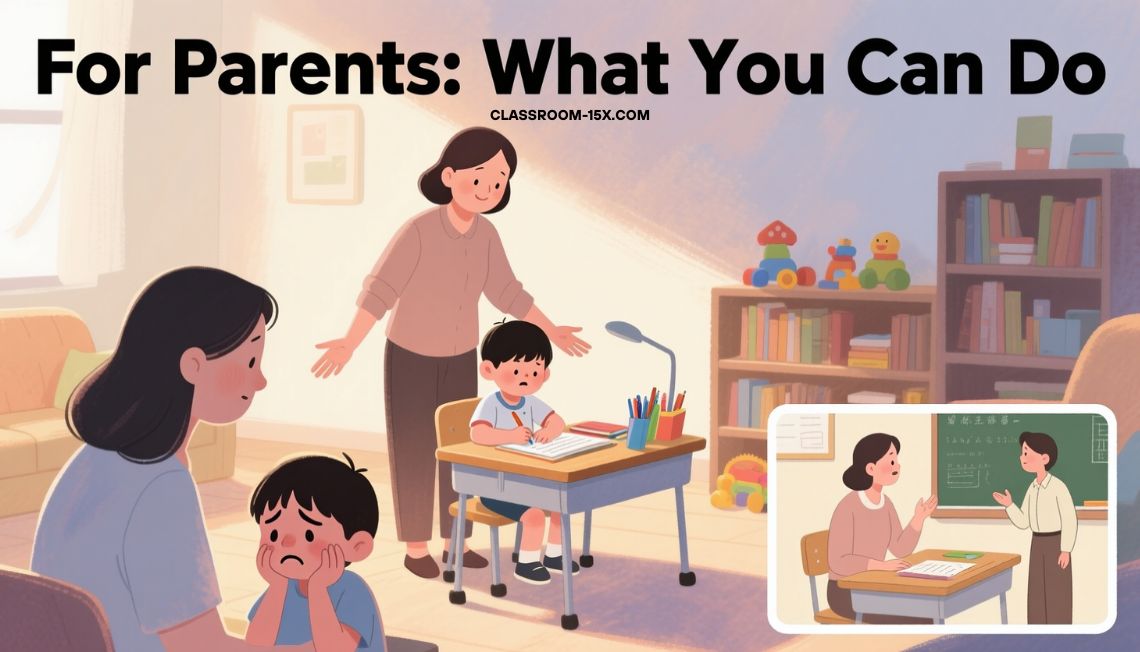
Be Nearby
Stay close, but don’t hover. Ask how things are going. Look at their work. Help when needed.
But let kids try first. They learn more when they solve problems on their own.
Watch for Signs of Trouble
Is your child quiet, angry, or sad? Are they missing work? Do they avoid school time?
These could be signs they’re struggling. Talk to them. Check with the teacher.
Talk to Teachers
Teachers want your child to do well. If something isn’t working, say so.
Maybe the work is too hard. Maybe your child needs more time. The teacher can help, but only if they know there’s a problem.
For Teachers: Tips That Help Students
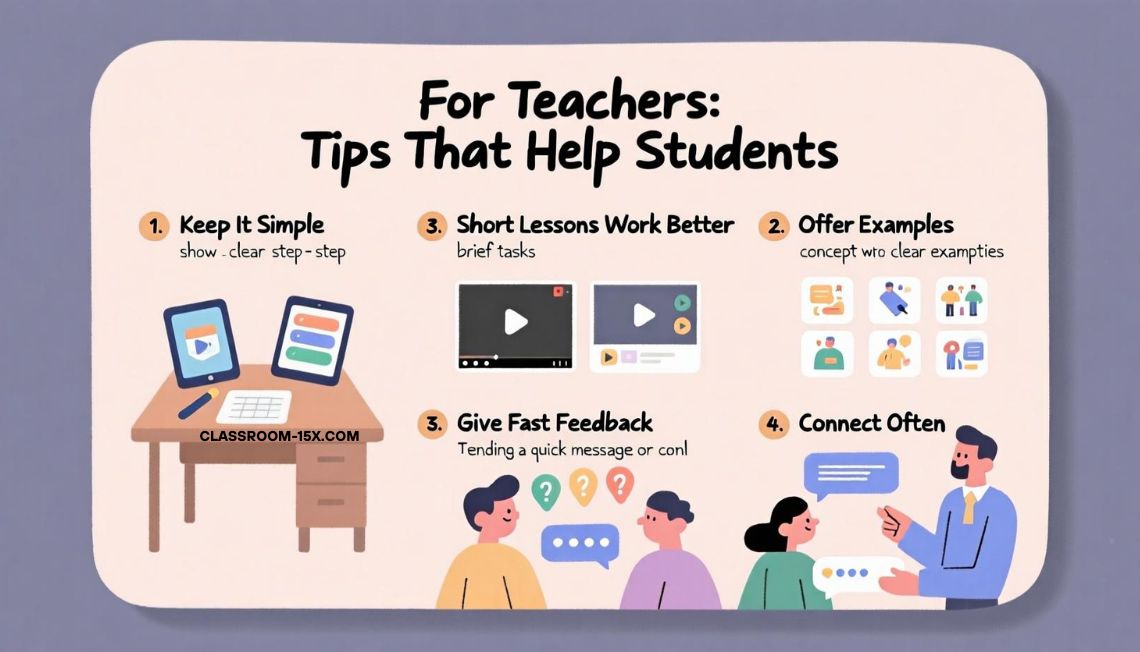
Keep It Simple
Use one or two tools. Give clear steps. Don’t jump between five platforms.
Students and parents need things to be easy to find and easy to use.
Short Lessons Work Better
Don’t give a 60-minute video. Use short clips. Give short tasks. Mix things up.
If students don’t understand something, offer examples. Repeat key points.
Give Fast Feedback
Don’t wait a week to grade something. Let students know what they did well and where they need help.
Even a quick message makes a difference.
Connect Often
Ask questions. Check in with students. Start class with a short chat or fun poll.
Even small things help students feel seen and heard.
Read: Distance Learning Resources: Tools for Students, Teachers, and Parents
Will Remote Learning Stay?
Yes, in some ways. Most students now go back to school. But remote learning won’t disappear.
Some schools use it on bad weather days. Some use it for sick kids. Some offer online classes as part of the regular program.
Remote learning also works for adults in job training or college.
So yes, remote learning is here to stay, but it works best when students and families choose it.
Remote vs In-Person Learning
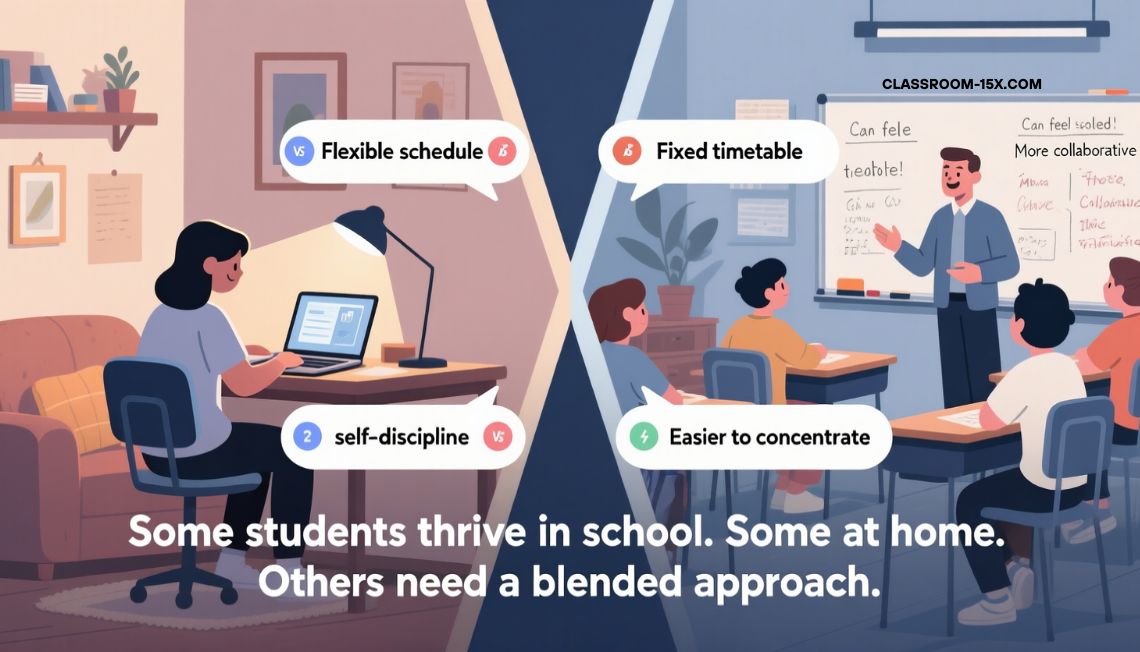
Remote Learning
- More flexible
- Can work at your own speed
- Saves travel time
- Can feel lonely
- Easy to get distracted
- Needs strong self-control
In-Person Learning
- More social
- Easier to stay focused
- Direct help from teachers
- Fixed schedule
- Less flexible
- May not fit all learning styles
Some students learn better in school. Some do better at home. Some need a mix.
Final Thoughts
Remote learning is not better or worse. It’s just different.
It gives more freedom. But it also asks more from students, teachers, and families.
You can make it work by using simple steps. Set a routine. Make a quiet space. Stay in touch. Ask for help.
The best learning happens when people care, stay patient, and work together.
FAQs
What is remote learning?
Remote learning is when students do school from home using a device like a laptop or tablet.
Is remote learning good for kids?
It can be. Some kids like it. Others miss friends and need more help.
What problems come with remote learning?
Distractions, tech issues, and loneliness are common. Some kids lose focus.
How can parents help?
Parents can set a routine, watch for signs of trouble, and talk to teachers.
Does remote learning replace school?
No. Most kids still go to school. But remote learning is a helpful option in some cases.