We all live on Earth, but how much do you know about it? Earth science Topics helps us understand our world. It covers rocks, weather, oceans, and more. In this guide, we’ll explore key topics. We’ll make it simple and exciting. You’ll learn what experts study and why it matters to you.
What Is Earth Science?
Earth science looks at our planet and how it works. It mixes many fields to explain land, sea, air, and space. Think of it as a big puzzle. Each piece shows how Earth changes over time.
We study Earth to solve problems like floods or quakes. It also helps us find resources like water or oil. Kids love it because of dinosaurs and volcanoes. Adults use it for jobs in mining or weather forecasting.
Main Branches of Earth Science
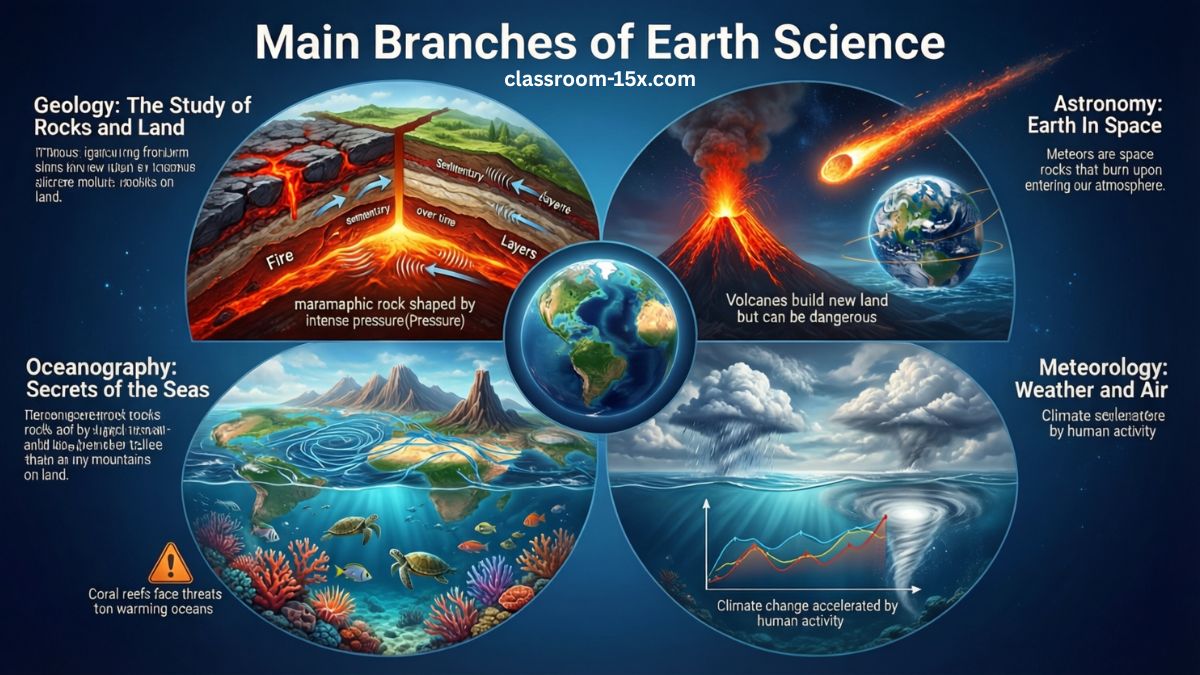
Earth science has four main parts. Each one focuses on a different side of our planet.
Geology: The Study of Rocks and Land
Geology is about Earth’s solid parts. It covers mountains, valleys, and what’s under your feet.
- Rocks form in three ways: from fire (igneous), layers (sedimentary), or pressure (metamorphic).
- Earthquakes happen when plates move. They shake the ground and can cause waves called tsunamis.
- Volcanoes spit out hot lava. They build new land but can be dangerous.
Oceanography: Secrets of the Seas
Oceans cover most of Earth. Oceanography explores water, waves, and sea life.
- Currents move water around the world. They affect weather and carry fish.
- The ocean floor has mountains taller than on land. We map them with special tools.
- Coral reefs are like underwater cities. They house many animals but face threats from warm water.
Meteorology: Weather and Air
Meteorology predicts rain or sun. It studies the sky and what makes storms.
- Clouds form from water in the air. Different types bring rain or snow.
- Hurricanes start over warm seas. They bring strong winds and floods.
- Climate is long-term weather. It’s changing fast due to human actions.
Astronomy: Earth in Space
Astronomy looks at stars and planets. It includes how Earth fits in the universe.
- Our planet spins and orbits the sun. This gives us days and seasons.
- The moon pulls on oceans to make tides.
- Meteors are rocks from space that burn up in our air.
Key Topics in Earth Science
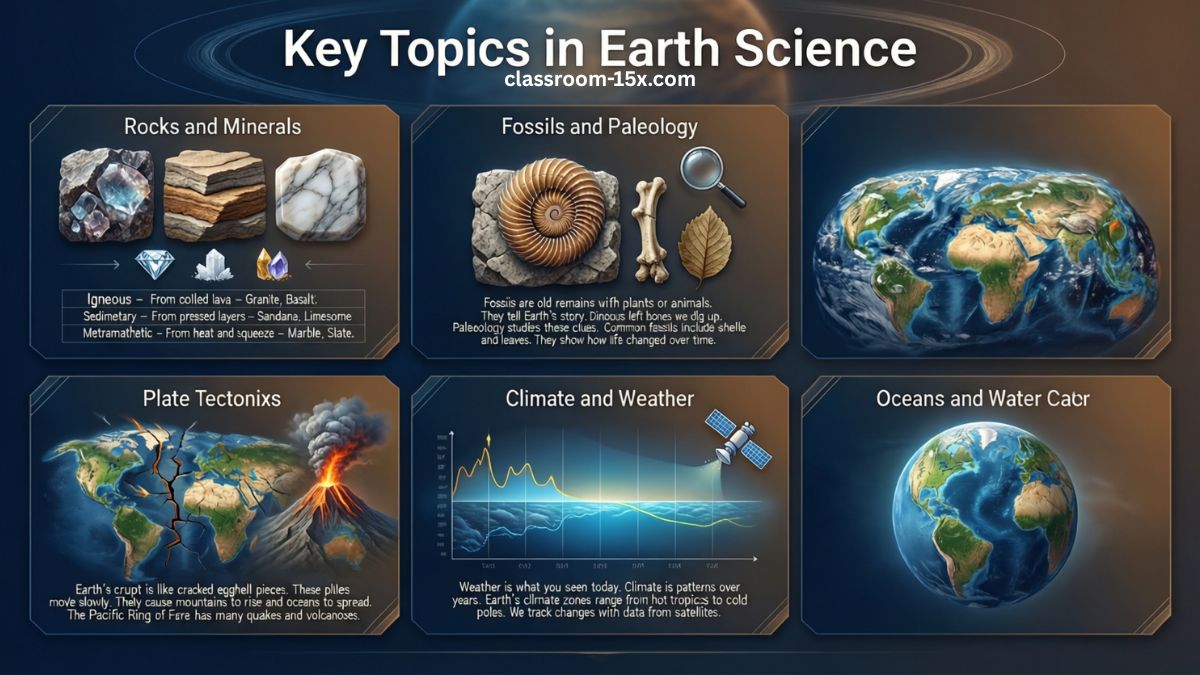
Let’s dive into big ideas. These build on the branches above.
Rocks and Minerals
Rocks make up Earth. Minerals are the building blocks.
We find gems like diamonds in rocks. Common minerals include quartz and salt.
Here’s a simple table of rock types:
| Rock Type | How It Forms | Examples |
|---|---|---|
| Igneous | From cooled lava | Granite, Basalt |
| Sedimentary | From pressed layers | Sandstone, Limestone |
| Metamorphic | From heat and squeeze | Marble, Slate |
Fossils and Paleontology
Fossils are old remains of plants or animals. They tell Earth’s story.
Dinosaurs left bones we dig up. Paleontology studies these clues.
Common fossils include shells and leaves. They show how life changed over time.
Plate Tectonics
Earth’s crust is like cracked eggshell pieces. These plates move slowly.
They cause mountains to rise and oceans to spread. The Pacific Ring of Fire has many quakes and volcanoes.
Climate and Weather
Weather is what you see today. Climate is patterns over years.
Earth’s climate zones range from hot tropics to cold poles. We track changes with data from satellites.
Oceans and Water Cycles
Water moves in a big loop. It rains, flows to seas, then evaporates.
Oceans hold most water. Rivers and lakes are fresh but small.
Earth’s History and Geologic Time
Earth is 4.5 billion years old. We split time into eras.
Use this table for a quick look:
| Era | Time Ago (Millions of Years) | Key Events |
|---|---|---|
| Precambrian | 4,500 to 541 | First life, no big animals |
| Paleozoic | 541 to 252 | Fish, forests, first reptiles |
| Mesozoic | 252 to 66 | Dinosaurs rule |
| Cenozoic | 66 to now | Mammals, humans appear |
Earth Science Across the US
The US has diverse land. Each region has unique features.
In the Northeast, old mountains like the Appalachians hold coal. The Midwest has flat plains great for farms. The West has volcanoes and canyons like the Grand Canyon.
South has swamps and beaches. We study these to understand local weather and resources.
Virtual Ways to Explore Earth Science
You don’t need to travel. Use online tools for fun learning.
Virtual fieldwork lets you “visit” sites like mountains or beaches on your screen. See 3D models of rocks and fossils. Rotate them to spot details.
These help teachers and students. They make far places feel close.
Read: Ketchum Meaning: Pokémon, Name Origin & Slang Explained 2026
What’s New in Earth Science
Science keeps growing. Recent news includes harmful algae in lakes. They hurt fish and water.
Plastic trash fills oceans. It harms sea life. We fight it by recycling more.
Climate models predict warmer days. Some areas get more rain, others dry up.
Extinctions like in the Devonian era teach us about today’s risks. Mollusks, like snails, show how life adapts.
Fun Earth Science Experiments You Can Try at Home
Want hands-on fun? Try these easy tests.
- Make a volcano: Mix baking soda and vinegar in a bottle. Watch it fizz like lava.
- Grow crystals: Dissolve salt in hot water. Let it cool on a string for sparkly shapes.
- Test soil: Dig dirt from your yard. Add water and shake. See layers form.
These show science in action. Do them with friends or family.
Careers in Earth Science: Jobs That Help Our Planet
Earth science leads to cool jobs. You could be a geologist hunting gems. Or a weather expert on TV.
Ocean scientists dive with sharks. Climate workers plan for a greener world.
Start with school classes. Then college for more skills. Jobs pay well and let you travel.
How Earth Science Touches Your Daily Life
Earth science is everywhere. It explains why your phone has minerals from mines.
Weather apps use meteorology. Food grows thanks to soil studies.
We need clean water from ocean knowledge. It keeps us safe from storms too.
Wrapping Up
There you have it – a full dive into earth science topics that shape our world. From rocks under your feet to stars above, these ideas connect us all. They help us live smarter, protect our planet, and spark wonder in kids and adults alike.
Ready to explore more? Grab a rock from your yard or watch the clouds. Earth science is your everyday adventure. Stay curious, and let’s keep learning about our amazing home.
FAQs About Earth Science Topics
You might have questions. Here are answers to common ones, plus extras.
What are the basic Earth science topics for beginners?
Start with rocks, weather, and oceans. They connect to daily life.
How does climate change fit into Earth science?
It’s a big part. We study why Earth warms and how to slow it.
Where can I find fossils near me?
Look in parks or beaches. Check local guides for safe spots.
Why do earthquakes happen?
Plates rub or crash. Energy releases as shakes.
What is the water cycle?
Water evaporates, forms clouds, rains, and repeats.
How old is Earth?
About 4.5 billion years. We know from rock dates.
Can kids study Earth science?
Yes! Books, videos, and simple experiments make it fun.
What tools do Earth scientists use?
Maps, drills, satellites, and computers for data.
How does space relate to Earth science?
We study moons, stars, and how they affect tides or climate.
Why recycle in Earth science?
It cuts waste. Less trash means healthier land and seas.