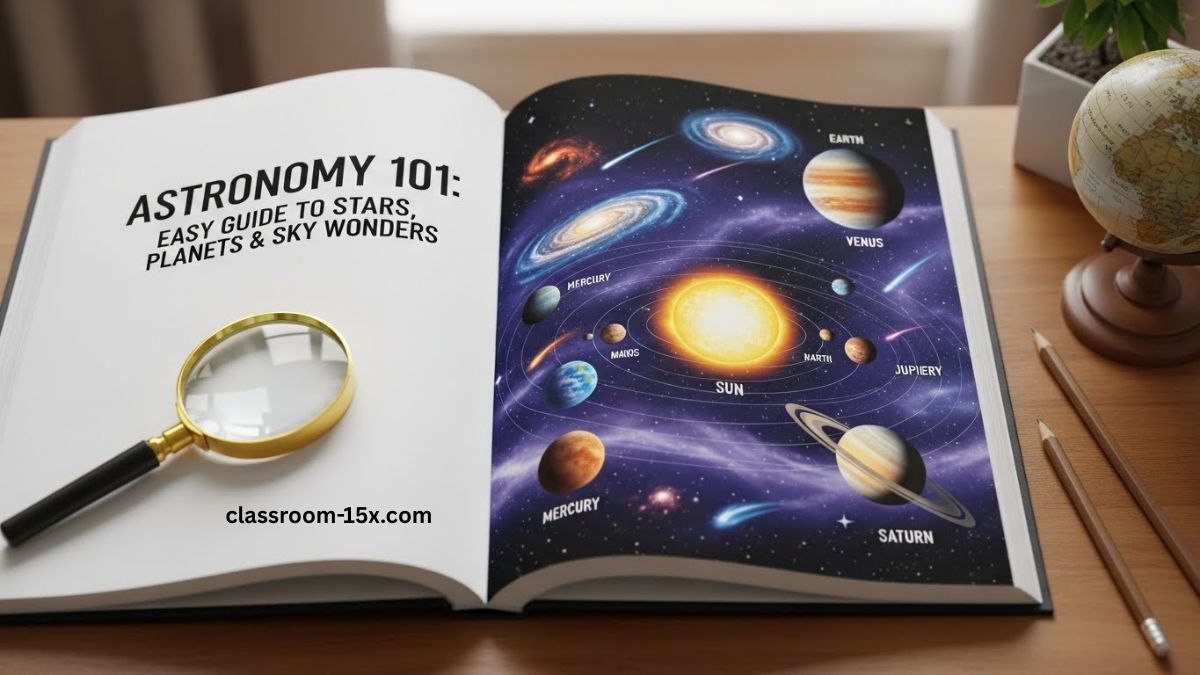
Hi there! If you’re new to astronomy, you’re in the right spot. I love sharing the wonders of the sky with folks just starting out. Think of this as your friendly chat about space. We’ll keep it easy, like talking to a curious kid. No big words or hard stuff. Just fun facts and tips to get you looking up at night.
Astronomy is all about watching and learning from the sky. You can do it from your backyard. Ready? Let’s jump in.
What Is Astronomy and Why Try It?
Astronomy means studying stars, planets, and space. People have done it for thousands of years. It helps us know where we fit in the big picture.
You might wonder why bother. Well, it’s exciting! Spot a shooting star or see Saturn’s rings through a scope. It makes you feel small but connected. Plus, it’s free most of the time. No need for fancy gear to start.
Many folks start because they see a bright star and want to know more. That’s you, right? Great. We’ll build from there.
Basics of the Night Sky
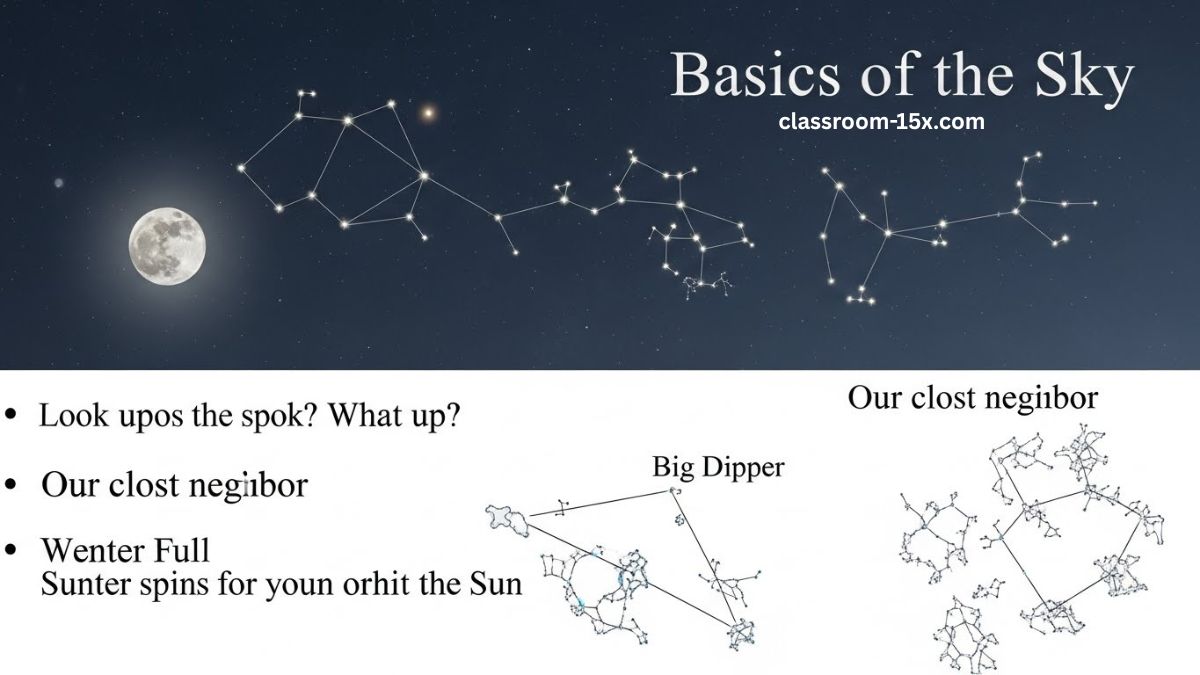
Look up on a clear night. What do you see? Stars, maybe the Moon, and some bright dots that are planets.
The sky changes with seasons. In summer, you see one set of stars. In winter, another. This happens because Earth spins and orbits the Sun.
Key things to spot:
- The Moon: Our closest neighbor. It has phases – new, full, and in between.
- Constellations: Groups of stars that look like shapes. Like the Big Dipper. It points to the North Star.
- Planets: They don’t twinkle like stars. Venus is super bright in the evening.
Dark spots are best for viewing. City lights hide stars. Head to a park or countryside if you can.
Our Solar System: Planets and More
We live in a solar system with the Sun at the center. Eight planets orbit it. Here’s a quick table of them:
| Planet | Distance from Sun (AU) | Fun Fact |
|---|---|---|
| Mercury | 0.4 | Hottest, no air |
| Venus | 0.7 | Brightest in sky |
| Earth | 1 | Our home, has life |
| Mars | 1.5 | Red, might have water |
| Jupiter | 5.2 | Biggest, has storms |
| Saturn | 9.5 | Rings you can see |
| Uranus | 19.8 | Tips on its side |
| Neptune | 30 | Windy, blue color |
AU means Astronomical Unit – Earth’s distance from the Sun.
Planets form from dust and gas around a new star. Some are rocky like Earth. Others are gas giants like Jupiter.
Don’t forget asteroids, comets, and dwarf planets like Pluto. Pluto got kicked out as a planet in 2006 because it’s small and has odd orbit.
Stars: The Lights of the Universe
Stars are big balls of hot gas. They shine by fusing atoms inside.
All stars start from clouds of gas. Gravity pulls them together. Then they heat up and light up.
Our Sun is a star. It’s average size. Some stars are huge and blue – hot ones. Others are small and red – cooler.
Stars live for billions of years. When they die, some explode as supernovas. That makes new stuff for planets.
You can see thousands of stars on a dark night. The brightest is Sirius.
Galaxies: Our Home and Beyond
A galaxy is a huge group of stars, gas, and dust. Our galaxy is the Milky Way. It looks like a band of light across the sky.
The Milky Way has billions of stars. We live on the edge, in a spiral arm.
Other galaxies exist too. Andromeda is the closest big one. You can see it with your eyes on dark nights.
Galaxies come in shapes: spiral, elliptical, irregular.
Nebulae: Cosmic Clouds
Nebulae are clouds in space. Some are where stars are born. Others are leftovers from dead stars.
The Orion Nebula is easy to spot in winter. It looks fuzzy through binoculars.
Types:
- Emission: Glow from hot gas.
- Reflection: Shine from nearby stars’ light.
- Dark: Block light behind them.
They add color to space photos.
How We Measure Space Distances
Space is big. We use special units.
In our solar system: Astronomical Units (AU). 1 AU is 93 million miles.
For stars: Light-years. Light travels one year. Nearest star is 4 light-years away.
Even bigger: Parsecs for galaxies.
To measure, we use parallax – like shifting your thumb with one eye closed.
How to Start Stargazing Tonight
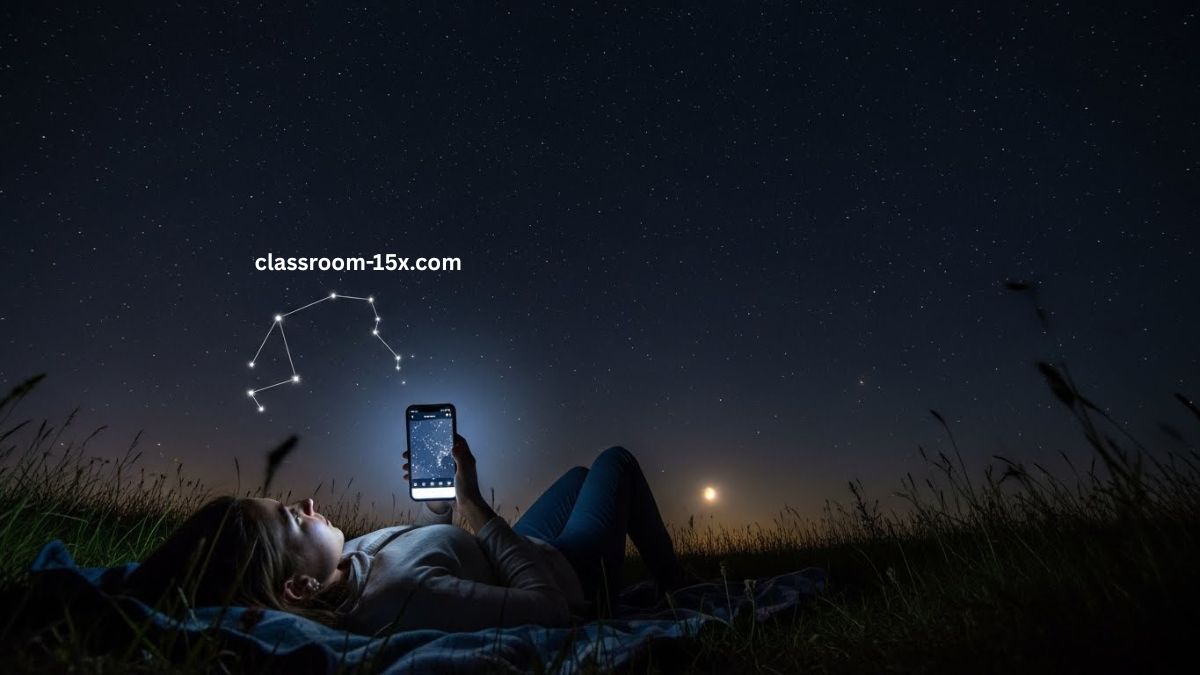
This is where we go beyond basics. Grab a blanket and go outside.
Steps:
- Pick a dark spot.
- Let your eyes adjust – 20 minutes, no lights.
- Use a star map app on your phone.
- Start with easy finds like the Moon or Big Dipper.
Join a local club. They have free events.
Best Tools for New Astronomers
You don’t need much, but tools help.
- Binoculars: Cheap and easy. See Moon craters.
- Telescope: Start small. A 4-inch one shows planets well.
Tips for picking:
- Go for steady mount.
- Avoid cheap junk from stores.
Apps like SkyView point out stars.
Read: Classroom 15x: Free Unblocked Games for School – Play Now on Chromebook
Bust Common Astronomy Myths
Myth 1: Stars twinkle because they’re far. No, it’s Earth’s air moving.
Myth 2: You can see the Great Wall from space. Wrong – too thin.
Myth 3: Black holes suck everything. Only if close.
Clear those up for better fun.
Fresh Finds in Astronomy
Space news keeps coming. In recent years, we found more exoplanets – worlds around other stars.
James Webb Telescope shows baby galaxies.
Watch for eclipses or meteor showers. Next big one? Check a calendar.
Conclusion
Astronomy 101 is your simple first step into one of the oldest and most exciting hobbies in the world. You now know the basic players — planets, stars, constellations, galaxies — and how easy it is to start watching them from your own backyard with just your eyes or a pair of binoculars. The night sky is always there, changing with the seasons, waiting for you to look up and wonder. No fancy equipment or expert knowledge is required — only curiosity and a clear night. So step outside tonight, turn off the lights, take a deep breath, and let the universe show you its quiet magic.
FAQs
What do I need to start astronomy?
Just your eyes! Add binoculars later.
Is Pluto a planet?
No, it’s a dwarf planet now. But still cool.
How far is the nearest star?
About 4 light-years. That’s far!
Can I see galaxies without a telescope?
Yes, Andromeda on dark nights.
What’s the best time to stargaze?
Clear nights, away from full Moon.
Do stars move?
They seem to, but it’s Earth turning.
How old is the universe?
Around 13.8 billion years.
What’s a shooting star?
A meteor – rock burning in air.
Can kids do astronomy?
Yes! It’s great for all ages.
Why does the Moon change shape?
Earth’s shadow and orbit.