You walk into your classroom. Kids chat loud. Some fidget. One or two act out. Sound familiar? Good classroom management changes that. It turns chaos into calm focus. Kids learn more. You feel less stressed.
Recent studies show strong management makes a real difference. One 2025 review found it boosts student learning, cuts bad behavior, and helps kids feel good about school. Another report says clear routines can drop behavior problems by up to 50 percent. Teachers lose hours each week to disruptions. Good strategies give that time back.
In this guide, you get proven ideas. We cover what top teachers do. We fix common mistakes. We add fresh tips for today’s kids, like tech help and special needs. By the end, you will have a full plan. Ready? Let’s start.
Why Classroom Management Matters More Than Ever?
Classroom management is not just about rules. It creates a safe space where every kid can learn. Without it, you lose teaching time. One survey showed teachers spend seven hours a month just on outbursts in some places.
Good management does three big things:
- Cuts disruptions so lessons run smooth.
- Builds trust so kids want to try hard.
- Lifts grades and happiness.
Research backs this. Effective strategies link to better test scores and fewer fights. New teachers often say they feel lost here. But simple changes fix that fast.
Common Classroom Management Mistakes and Easy Fixes
Many teachers make the same slip-ups. Here are the top ones and quick ways to fix them.
- Yelling or punishing the whole class. This makes kids feel bad and does not help. Fix: Talk to one kid quietly. Praise the group when they do well.
- Ignoring small problems. They grow big. Fix: Use a quick look or soft word right away.
- Changing rules every day. Kids get confused. Fix: Pick three to five clear rules and stick to them.
- Only pointing out bad behavior. Kids hear only negatives. Fix: Catch kids doing good things five times more than you catch bad ones.
- Sitting at your desk all class. You miss early signs of trouble. Fix: Walk around and smile at kids.
Fix these and your room runs better right away.
Build Strong Bonds with Every Student
Kids behave better when they like and trust you. Start here.
Greet each child at the door every morning. A high-five, smile, or quick “How are you?” works wonders. One study found this cuts disruptions and adds a full hour of good learning time each day.
Keep building all year:
- Check in one-on-one once a week.
- Ask “What went well today?” after tough moments.
- Fix hurt feelings fast. Say, “I see you are upset. Let’s talk and make it right.”
Strong bonds cut problems by up to 75 percent. Kids feel safe. They work harder for you.
Set Clear Rules That Kids Help Make
Kids follow rules they help create. On day one, sit together and list what a great class looks like. Use simple words like “Be kind,” “Try hard,” and “Help others.”
Post the rules big on the wall. Review them every Monday. When someone slips, ask, “Which rule can we practice more?” This builds ownership. No more fights over “unfair” rules.
Read: Classroom 15X in 2026: Best Unblocked Games Platform + Easy Future Classroom Design Guide
Proactive Strategies to Stop Problems Before They Start
The best teachers prevent trouble. Here are eight easy moves that work.
- Greet at the door – Connect before class starts.
- Use quick reminders – A bell, light flick, or hand signal tells kids to settle.
- Set seats that help – Put chatty kids apart. Let kids help choose seats sometimes.
- Give specific praise – Say “Great job walking quietly” instead of just “Good.”
- Move around the room – Your presence keeps kids on task.
- Stay consistent – Same rule for every kid, every time.
- Co-create norms – Kids own the class rules.
- Restore after mistakes – Fix the relationship fast.
Use these daily. Watch problems drop.
| Strategy | How to Do It | Why It Works |
|---|---|---|
| Greet at door | Smile and say each name | Builds trust fast |
| Specific praise | Name the good action | Kids repeat good behavior |
| Quick cues | Bell or hand signal | No yelling needed |
| Active walking | Move and check in | Spots trouble early |
Use Positive Words and Rewards
Praise works better than punishment. Look for good actions and name them out loud. “I love how you helped your friend with the pencil.” Kids beam and do it more.
Try a simple reward jar. Drop a pom-pom in when the class does well. Full jar means extra recess or a fun game. Keep it fair and quick.
Help Kids Control Their Own Feelings
Teach self-control so kids manage themselves. Simple tools:
- Take three deep breaths when upset.
- Use a calm corner with soft toys or drawings.
- Name feelings: “I feel angry. What can I do?”
Model it yourself. Say, “I feel rushed today, so I will breathe.” Kids copy you. Self-control cuts outbursts and helps learning.
Keep the Room Calm and Quiet When Needed
Noisy rooms kill focus. Use these quiet tricks:
- Whisper directions.
- Play soft music during work time.
- Give brain breaks: stand, stretch, then sit again.
- Use group signals like “Give me five” (eyes, ears, mouth, hands, feet ready).
Accept some happy noise. A lively class can still learn well.
Handle Tough Moments Without Shame
When a kid acts out, stay calm. Pull them aside. Ask, “What happened? How can we fix it?” No public call-outs. That hurts feelings and trust.
Skip group punishments. They make innocent kids mad. Focus on the one who needs help. Repair the bond and move on.
Make Strategies Fit Every Grade and Every Kid
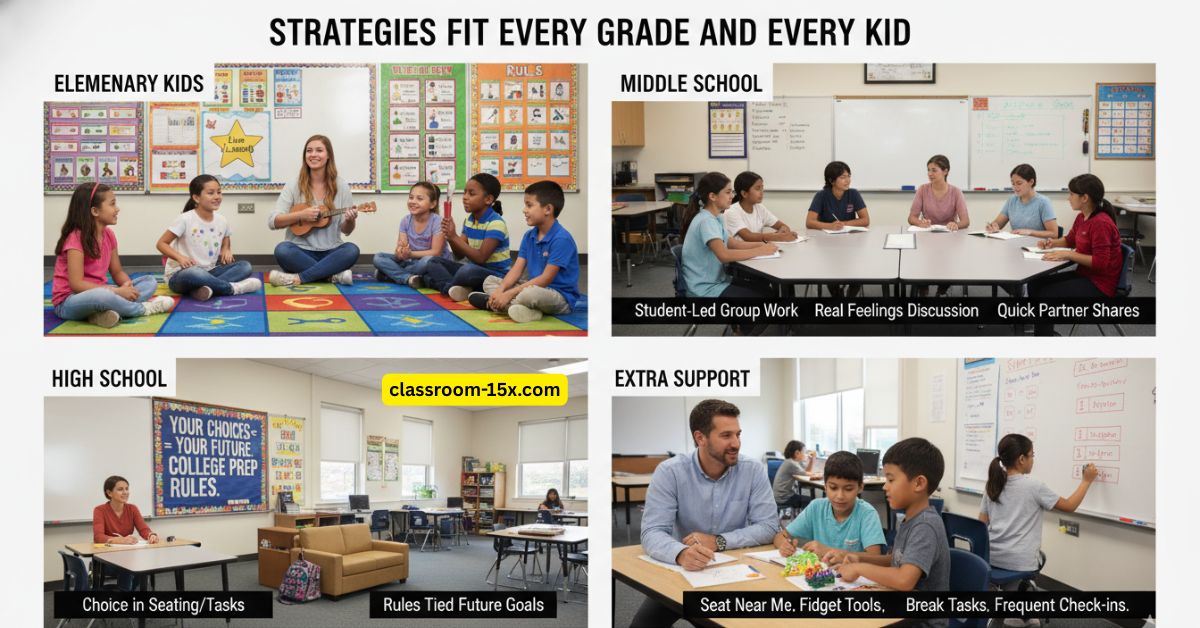
One size does not fit all. Change your approach by age and needs.
Elementary kids: Use songs for transitions. Give classroom jobs like line leader. Keep rules visual with pictures.
Middle school: Let kids lead group work. Talk about real feelings. Use quick partner shares.
High school: Give more choice in seating and tasks. Tie rules to future goals like college.
For kids with extra needs (like focus trouble or big emotions), add extra help:
- Seat them near you.
- Give fidget tools.
- Break tasks into tiny steps.
- Check in more often.
These small tweaks help every child succeed.
Add Simple Tech to Make Management Easier
Today’s classrooms have screens. Use them smartly. Set clear phone rules: screens down during talk time. Use timer apps on the board for work chunks. Digital check-in forms let kids quietly share how they feel.
Track behavior with a simple class chart on your tablet. Praise rises fast. Tech saves you time and keeps things fair.
Track What Works and Keep Improving
Good teachers check their plan. Every month, ask yourself:
- Did disruptions drop?
- Do kids seem happier?
- Am I less tired?
Make a quick table like this:
| Week | Disruptions Noted | Praise Given | What I Will Change Next |
|---|---|---|---|
| 1 | 12 | 45 | More greetings |
| 2 | 8 | 60 | Add calm corner |
Share wins with kids. “We cut interruptions in half!” They feel proud too.
Put It All Together for Long-Term Success
Start small. Pick three strategies this week. Practice them until they feel natural. Talk to other teachers. Share what works.
Remember: You do not need perfect. You need consistent and kind. Over time, your classroom becomes a place kids love to enter. Learning jumps. You enjoy teaching again.
Classroom management is a skill you grow. These strategies give you the tools. Use them. Watch your class thrive.
Frequently Asked Questions
What is the fastest way to improve classroom management? Start with door greetings and specific praise. Do them every day for one week. You will see quick changes.
How do I handle a very disruptive student? Talk one-on-one. Find out why. Set a small goal together. Praise every step forward. Get help from a counselor if needed.
Do these strategies work for big classes? Yes! Use group signals and clear routines. Walk the room more. Pair kids for quick checks.
What if I am a new teacher? Begin with three rules and daily greetings. Practice one new tip each week. You will build confidence fast.
How can I involve parents? Send short notes about good behavior. Invite them to see your calm routines at open house.
Does technology really help management? Yes. Timers and quiet signals on screens keep everyone on track without extra talking.
What about kids with special needs? Give extra tools like seat cushions or picture schedules. Check in often. Small changes make big differences.
How long until I see results? Most teachers notice calmer days in two weeks. Stick with it for a month and big improvements show.
Can I still have fun in a well-managed class? Absolutely! Rules create safety so games and laughs happen more.
What is the biggest mistake new teachers make? Trying too many rules at once. Keep it simple and consistent.