
Teaching is not just about talking. It’s about how you use your time. Brisk teaching helps you teach better and faster. It keeps students focused. It makes learning clear.
If your lessons feel slow, students get bored. They stop listening. You lose time. But if you speed things up, students pay attention. That’s what brisk teaching does.
This article explains brisk teaching in a clear and simple way. You’ll learn what it is, why it helps, and how to use it in your classroom.
What Is Brisk Teaching?
Brisk teaching means moving through your lesson without wasting time. You talk clearly. You give short instructions. You move from one part to the next without delay.
It’s like keeping a good rhythm. If the class slows down, students get distracted. If you keep things moving, they stay on task.
You don’t rush. You just stay focused and make good use of every minute.
Why Brisk Teaching Works
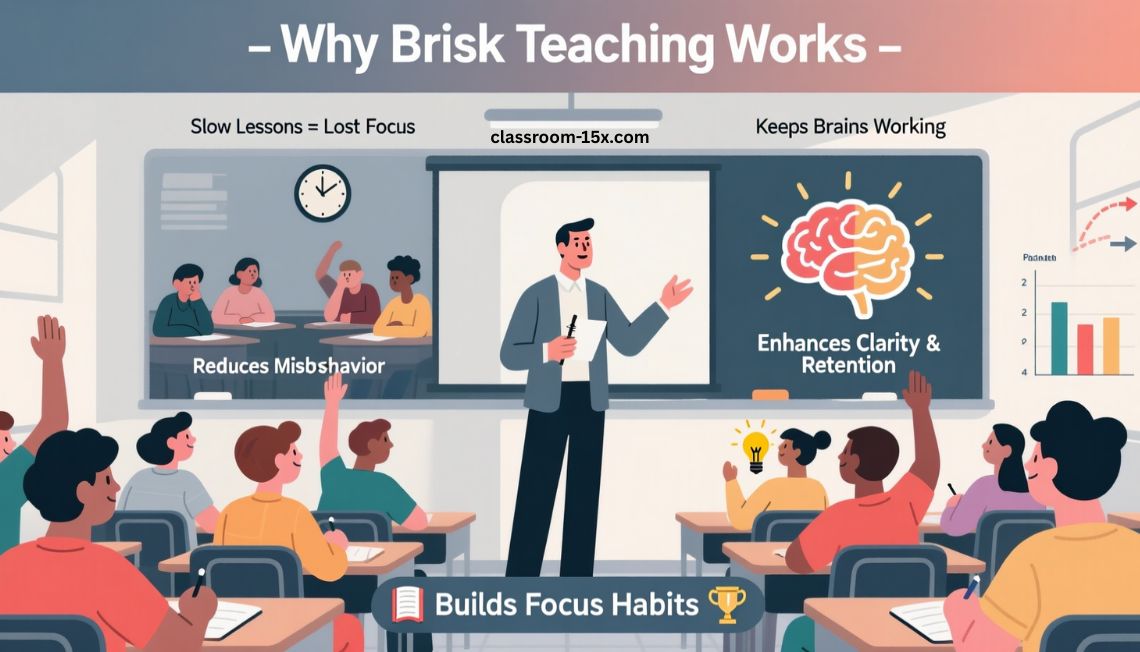
Slow lessons cause problems. Students start talking. They stop listening. They lose interest.
Brisk teaching keeps students active. It tells them that class time is important. It shows that you expect them to stay focused.
Here’s why it helps:
- Keeps brains working: Students think more when the class moves quickly.
- Stops bad behavior: Busy students behave better.
- Makes things clear: Students stay alert and understand better.
- Creates good habits: Students come to class ready to listen and work.
Myths About Brisk Teaching
Some people think brisk means rushed. It doesn’t.
Brisk teaching means clear steps and no wasted time. You still check if students understand. You still answer questions. But you don’t repeat yourself over and over.
Others think it feels cold or strict. That’s not true either. You can smile, laugh, and be kind while still moving at a good pace.
How You Know Your Lessons Are Too Slow
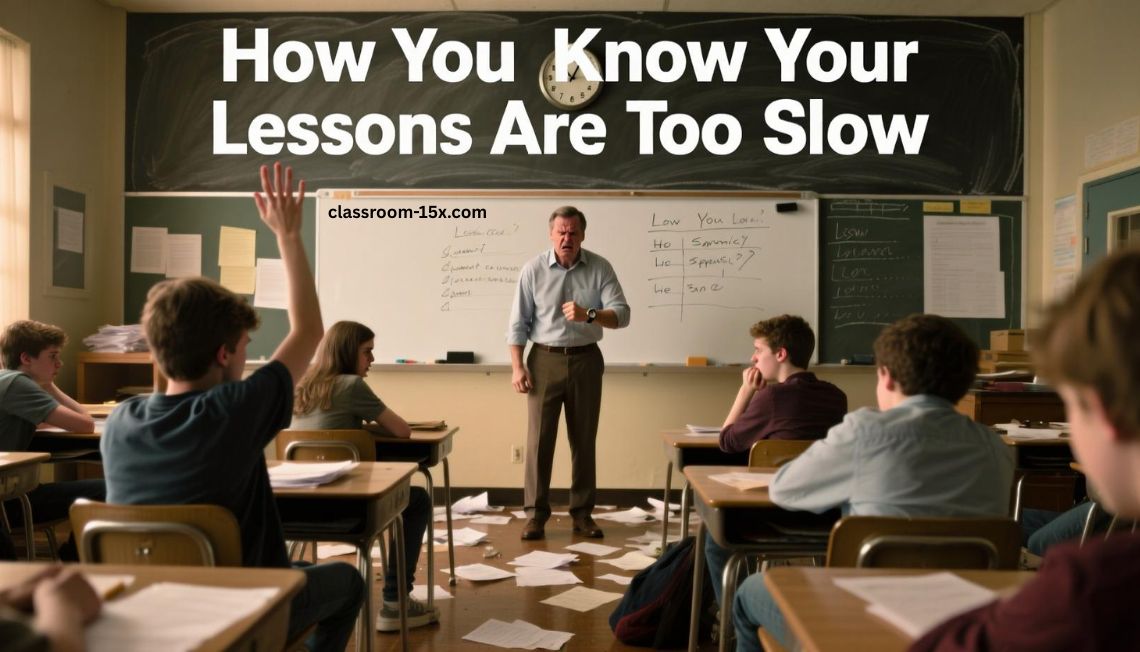
Sometimes, you don’t even notice slow spots in your lesson. But here are a few clues:
- Students ask, “What are we doing?” even after you explain.
- You spend more time trying to get their attention than giving directions.
- Students talk a lot during transitions.
- You often repeat yourself.
- You lose time between parts of your lesson.
If this happens in your class, brisk teaching can help.
How To Use Brisk Teaching Right Away
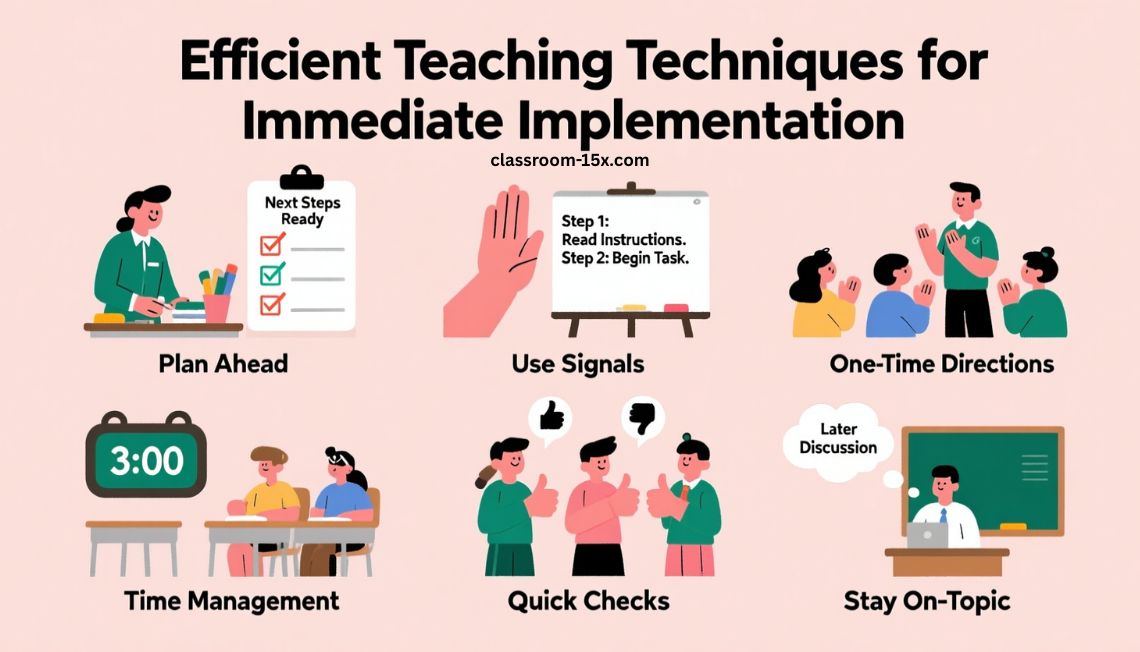
You don’t need a new plan or extra tools. Start with small steps. These tips work for any grade level.
1. Plan What Comes Next
Know your next step before you finish the first. Have all materials ready. Move quickly to the next part.
Try this: “When you finish your work, put your pencil down and wait. I’ll give the next step soon.”
2. Use Simple Signals
Use one signal to get the class’s attention. Practice it. Stick to it.
Try this: Clap two times. Students clap back. You speak. They listen.
3. Give Directions Once
Say it clearly. Say it once. Then start. Don’t repeat unless needed.
Try this: Post the steps on the board. Say, “If you forget, check the board.”
4. Use Timers
Set a time for each task. Tell students how long they have.
Try this: “You have three minutes to finish these problems. Go.”
5. Check Quickly, Then Keep Moving
You don’t need a long break to check if they get it. Use fast tools.
Try this: “Thumbs up if you understand. Sideways if unsure. Let’s keep going.”
6. Keep Talk On-Topic
Stay on task. If something comes up that’s off-topic, save it for later.
Try this: “That’s a great story. Tell me after class. Let’s finish this part first.”
What a Brisk Lesson Looks Like
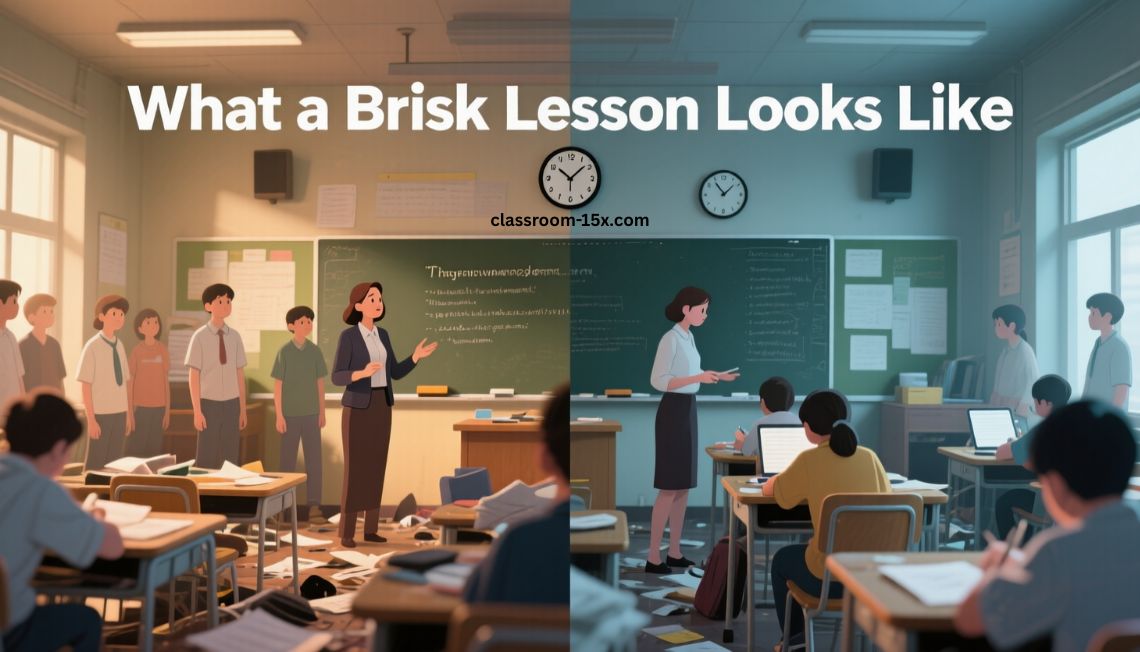
Let’s compare two classrooms.
In Room A:
The teacher gives directions. Students ask questions. The teacher repeats herself. Some students get up. Ten minutes go by before the work starts.
In Room B:
The teacher says, “You have five minutes to finish three questions. Timer starts now.” Students work right away. The teacher walks around and helps. The room is focused.
Both teachers taught the same thing. But one used time better.
What You Get With Brisk Teaching
Brisk teaching saves time. That means you can do more in each class. You can review more, talk more, and help more.
It also tells students that class time matters. It sets a clear tone. You are in charge. They are here to learn.
Students learn to follow directions the first time. They know what’s coming. They trust the pace.
Common Mistakes To Avoid
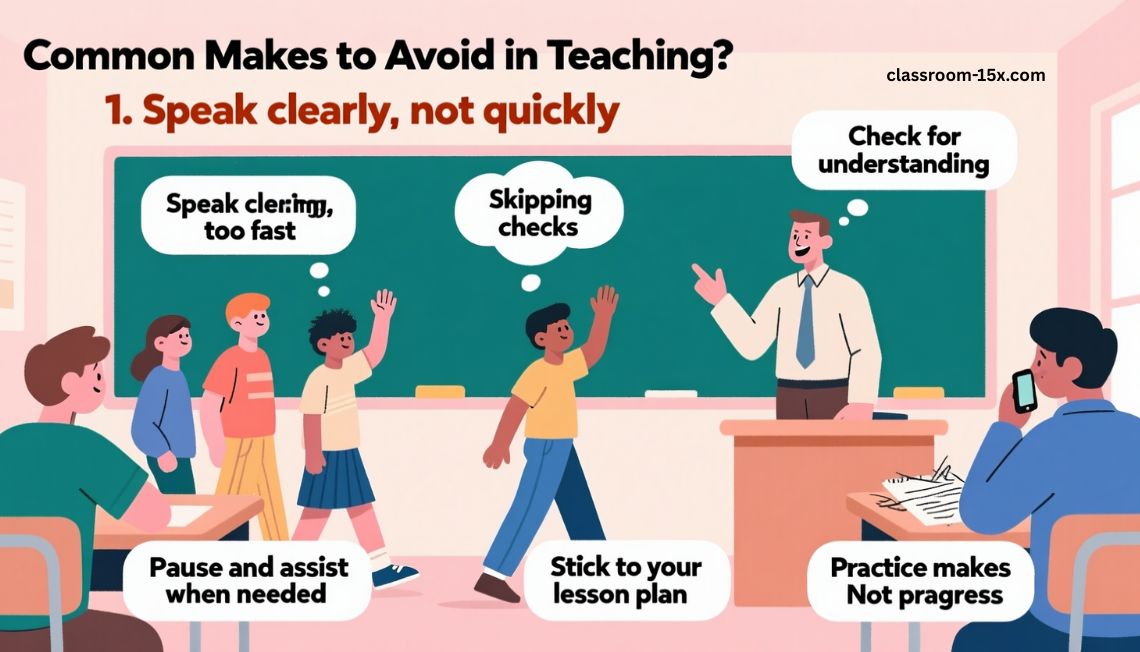
Don’t worry if it feels strange at first. Everyone needs practice. But here are a few things to avoid:
- Talking too fast: Speak clearly, not quickly.
- Skipping checks: Make sure students understand before moving on.
- Ignoring student needs: Be ready to slow down when someone needs help.
- Losing focus: Stick to your plan. Don’t get off track.
Brisk Teaching Helps With Behavior
When students are busy, they don’t have time to act out. They stay on task. They focus on learning.
You also build a stronger class routine. Students know what to expect. They know you’ll keep things moving.
You don’t need to raise your voice. The pace sets the tone.
Read: Desmos Classroom Activities: A Simple Guide for Teaching Math Better
Final Thoughts
Brisk teaching helps you get more done in less time. It keeps students focused. It gives your class a good rhythm.
You don’t need big changes. Start small. Set a timer. Give short, clear steps. Keep the pace up.
You’ll feel the difference. So will your students.
FAQs About Brisk Teaching
What does brisk teaching mean?
It means teaching at a steady pace without wasting time. You give clear steps and keep things moving.
Is brisk teaching too fast for young students?
No. Young students do better with short, clear steps. A good pace helps them stay focused.
Will brisk teaching make students feel rushed?
Not if you check for understanding and give time to think. You keep the lesson moving but still support your students.
How do I start?
Pick one thing. Try using a timer or posting directions. Then build from there.
Can I still be warm and friendly?
Yes. You can smile, laugh, and be kind. Brisk teaching is about using time well, not being strict or cold.